
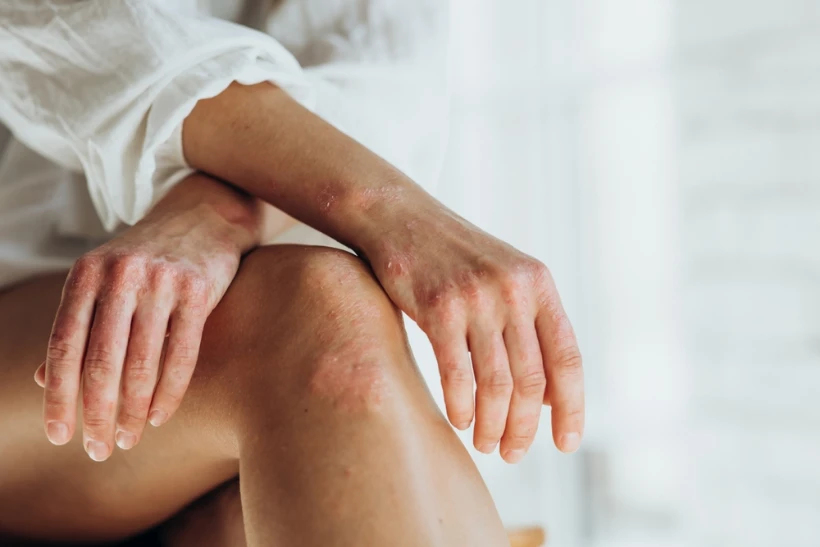
October 29 is World Psoriasis Day, a good moment to talk about a skin condition that affects roughly 3 percent of adults in the United States. Psoriasis is a chronic, immune-driven condition that speeds up the growth of skin cells, causing raised, scaly patches that can itch, crack, and burn. It shows up in both men and women at similar rates, but research suggests it often looks and feels different depending on who has it.
If you have noticed a stubborn rash, dry patches that keep coming back, or nail changes you cannot explain, you do not have to wait months to find out what is going on. At ExpressMED, our walk-in providers in Manchester and Salem, NH can take a first look, start initial care, and help connect you with a dermatologist when a specialist is the right next step.
What Psoriasis Looks Like
The most common form is plaque psoriasis, which causes thick, raised patches covered in silvery or whitish scale. On lighter skin these patches tend to look pink or red; on darker skin they may appear purple, gray, or dark brown. Common places include:
- Elbows, knees, and lower back
- The scalp and hairline, where it is often mistaken for dandruff
- Skin folds, the groin, and the genital area
- Fingernails and toenails, which can pit, thicken, discolor, or lift
Psoriasis is not contagious. It cannot be caught from someone else, and it is not caused by poor hygiene. Flares are often linked to triggers such as stress, skin injury, infections like strep throat, cold dry weather, smoking, heavy alcohol use, and certain medications. That makes fall and early winter in New Hampshire a common time for symptoms to act up.
How Psoriasis Tends to Affect Men
Several large registry studies have found that men, on average, have more severe skin involvement. In a Swedish study of more than 2,000 people with psoriasis, men had higher scores on the Psoriasis Area and Severity Index (PASI), which measures how much skin is affected and how inflamed it is. Men also appear more likely to be prescribed systemic or biologic treatments, which may partly reflect that higher severity.
Men may be more likely to have psoriasis in the genital area, which many people feel uncomfortable bringing up. It is worth mentioning to a provider. Genital psoriasis is common, treatable, and easier to manage when it is identified rather than guessed at with over-the-counter creams.
When psoriasis affects the joints, a condition called psoriatic arthritis, men are more likely than women to develop the axial form, which involves the spine and can show up as stiffness and pain in the lower back.
How Psoriasis Tends to Affect Women
Women often have lower severity scores on paper, yet studies consistently show that psoriasis takes a larger toll on their quality of life. Women with psoriasis report more stigma and are more likely than men with psoriasis to experience depression and anxiety. Research also suggests women with psoriasis may be more likely to carry cardiometabolic risk factors such as excess weight.
Hormones play a role, too. Estrogen appears to influence immune activity, and many women notice that symptoms shift across the menstrual cycle, during pregnancy, after giving birth, and around menopause. Some women improve during pregnancy while others see no change or a flare, so anyone who is pregnant or planning a pregnancy should review treatment choices with a clinician.
With psoriatic arthritis, women are more likely to develop symptoms in the smaller peripheral joints, such as the fingers, wrists, elbows, and toes, often on both sides of the body, and to report higher levels of pain and fatigue.
Why These Differences Matter
Knowing these patterns can help you speak up for yourself. A man with widespread plaques may need a faster route to specialist treatment. A woman whose patches look mild but are affecting her sleep, mood, or confidence deserves to have that impact taken seriously. Either way, psoriasis is linked with other health concerns, including heart disease, diabetes, and depression, which is why it should be treated as more than a surface issue.
When to Get a Rash or Skin Patch Checked
Many skin conditions can look alike. Eczema, fungal infections, contact dermatitis, and seborrheic dermatitis are all commonly confused with psoriasis. Consider a visit if you notice:
- A rash or scaly patch that lasts more than a couple of weeks or keeps returning
- Cracked or bleeding skin, or patches that are spreading
- Nail pitting, thickening, or separation from the nail bed
- Swollen, stiff, or painful joints along with skin symptoms
- Signs of skin infection, such as warmth, increasing redness, drainage, or fever
How ExpressMED Can Help as Your First Stop
Getting in to see a dermatologist can take time. ExpressMED gives you a faster, more affordable place to start. Our urgent care services are available on a walk-in basis, with no appointment needed, so you can have a provider look at your skin sooner rather than later. During a visit, our team can:
- Examine the rash and review your symptoms, history, and possible triggers
- Help rule out look-alike conditions, including skin infections
- Order lab work when it can help clarify what is going on
- Recommend initial treatment and skin care steps to calm a flare
- Help coordinate a referral to a dermatologist for confirmation, advanced treatment, or ongoing management
ExpressMED is part of a network of NH specialty practices built around access and affordability. When you need a specialist, we help keep your care connected so you are not starting from scratch. Psoriasis is a long-term condition, and a dermatologist is the right partner for ongoing treatment such as prescription topicals, light therapy, or biologic medications. We are here to help you get to that point with answers in hand.
Visit ExpressMED in Manchester or Salem, NH
Walk in at any of our three locations. You can save time by completing patient forms ahead of your visit, and you can review coverage details on our billing and insurance page.
- Manchester Executive: 1 Highlander Way, Manchester, NH 03103, (603) 625-2622
- Manchester Downtown: 35 Kosciuszko Street, Manchester, NH 03101, (603) 627-8053
- Salem: 159 North Broadway, Salem, NH 03079, (603) 898-0961, open Saturdays 9 AM to 4 PM
Have a question before you come in? Contact us or browse more health tips in our articles section.
Frequently Asked Questions
1. Can urgent care diagnose psoriasis?
An urgent care provider can examine your skin, review your symptoms, and help determine whether psoriasis is likely or whether something else, such as eczema or a fungal infection, is the cause. Because psoriasis is a long-term condition, a dermatologist typically confirms the diagnosis and guides ongoing treatment, and ExpressMED can help coordinate that referral.
2. Is psoriasis worse in men or women?
Studies suggest men tend to have more severe skin involvement on average, while women often report a greater impact on quality of life, including higher rates of depression and anxiety. Every person is different, so severity should be judged by both how the skin looks and how it affects daily life.
3. Is psoriasis contagious?
No. Psoriasis is an immune-related condition, not an infection. It cannot spread from person to person through touch, sharing towels, or swimming pools.
4. What can trigger a psoriasis flare?
Common triggers include stress, cold and dry weather, skin injuries such as cuts or scrapes, infections like strep throat, smoking, heavy alcohol use, and some medications. Hormonal changes can also affect symptoms in women.
5. Do I need an appointment to have a rash checked at ExpressMED?
No appointment is needed. Walk in at our Manchester Executive, Manchester Downtown, or Salem, NH location during clinic hours, and our team will evaluate your skin and help you plan next steps.